From Theory to Tool: Making Generative AI Work for You
@mypracticalgenerativeaireport
Why practical generative AI matters for working adults
Generative AI is no longer a topic reserved for data scientists and machine learning engineers. Over the past year, tools that can draft emails, summarize documents, generate images, and even write code have become widely available. For working adults, the question is not whether these tools are impressive, but how to make them useful in daily tasks without needing a technical background.
The gap between seeing a demo of generative AI and applying it to a real work problem can feel wide. Many people try a chatbot, ask a few questions, and then wonder what to do next. The real value lies in moving from passive consumption of AI outputs to actively building small, focused tools that solve a specific need. That shift from spectator to builder is what separates curiosity from genuine productivity gains.
What does practical generative AI look like?
At its core, practical generative AI means using these models to complete tasks that would otherwise take more time, effort, or specialized skills. It is not about building a general-purpose assistant. It is about creating a narrow, reliable tool that does one thing well. For example, a marketing coordinator might want a tool that rewrites product descriptions for different audiences. A customer service lead might need a tool that drafts responses to common complaints while keeping the company tone consistent. A project manager could use generative AI to automatically summarize meeting notes and extract action items.
These are not hypothetical use cases. They represent the kind of focused, repeatable tasks that generative AI handles well. The challenge has always been that building even a simple tool traditionally required coding knowledge. That barrier is now lower than many realize, thanks to no-code platforms and visual builders that let users design, test, and launch an app without writing a single line of code.
What changes when you build your own tool
Using a general chatbot to answer questions is one thing. Building a purpose-built tool is another. When you design a tool yourself, you control the inputs, the instructions given to the model, and the output format. That control makes the results more predictable and more useful for a specific context. You can set guardrails to avoid irrelevant or off-brand responses. You can test the tool with real examples before sharing it with colleagues.

This is where the phrase practical generative AI takes on real meaning. It is not about following a trend or experimenting for its own sake. It is about identifying a bottleneck in your workflow and removing it with a custom solution. The process of building also teaches you how these models behave, what they are good at, and where they still struggle. That understanding is valuable no matter how the technology evolves.
What you need to get started
The requirements are simpler than most people expect. You need a clear problem to solve, a willingness to iterate, and a platform that abstracts away the technical complexity. Many no-code platforms now offer drag-and-drop interfaces where you can connect a prompt template to an input field, define the model behavior through examples, and deploy the result as a web app or a browser extension.
Some practical things to consider before starting:
- Pick a task you do at least once a week. The time you invest in building the tool should pay back quickly.
- Start with a narrow scope. A tool that does one thing well is more useful than a tool that tries to do everything and fails.
- Plan to test with real data. The model may behave differently on your actual content than on the examples you feed it during setup.
- Think about how you will share the tool. A simple interface that a colleague can use without training is often the best approach.
These steps might sound like common sense, but they are often skipped when people rush to use a new technology. Taking a structured approach makes the difference between a tool that collects digital dust and one that becomes part of your routine.
Common pitfalls and how to avoid them
One mistake is expecting the model to understand context without clear instructions. Generative AI models follow patterns, not intent. If your prompt is vague, the output will be too. Writing a good prompt requires the same clarity you would use when explaining a task to a new colleague. Another pitfall is over-relying on the model for factual accuracy. These models can produce confident-sounding but incorrect information. Any tool you build should include a step where a human reviews the output before it is used or shared.
There is also a temptation to add too many features at once. A tool that tries to do several things often performs each one poorly. It is better to build a simple version first, get feedback, and then expand. This iterative approach aligns well with how working adults can fit learning into a busy schedule. You can build a small tool in a few hours, test it over a week, and improve it gradually.
How a structured learning experience helps
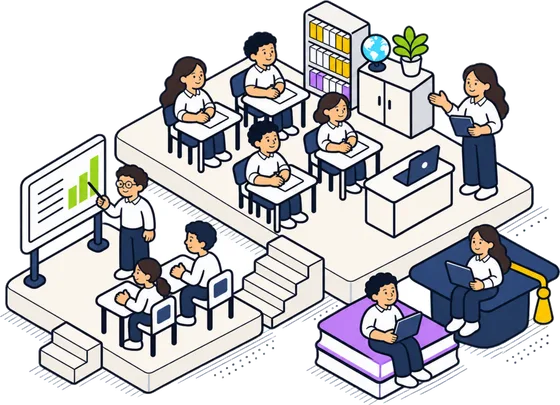
For someone who wants to move from curiosity to capability, a guided classroom setting can accelerate the process. A course that brings together other working adults, provides a structured curriculum, and offers hands-on time to build a real app removes the guesswork. Instead of piecing together tutorials from different sources, you get a coherent path from idea to launch. The two-day format is intensive enough to produce a working tool, yet short enough to fit into a busy work schedule.
The focus on no-code development means you do not need to learn programming syntax or debug error messages. You concentrate on the logic of the tool, the design of the prompts, and the testing of outputs. These are skills that transfer to any future generative AI platform, regardless of which model or interface becomes popular next.

Making the shift from consumer to creator
The most significant change for many people is the mindset shift. Using generative AI as a consumer means typing a question and hoping for a good answer. Building with generative AI means defining the problem, designing the solution, and evaluating the results. That active role changes how you see the technology. You stop asking "What can this do?" and start asking "What can I make this do for my work?"
Practical generative AI is not about mastering every new model or keeping up with every headline. It is about finding one or two tasks where the technology can make your day easier, then building something that does that task reliably. The skills you develop along the way, such as writing clear prompts, testing systematically, and iterating based on feedback, are useful no matter what the next version of AI brings.